Project 01 / MSc dissertation
Electromagnetic–thermal modelling of an F1 MGU-K
Connecting a representative 2026 F1 MGU-K, a lap duty cycle and temperature-dependent electromagnetic behaviour.
01 / Objective
How does a changing lap demand translate into component losses, temperatures and electromagnetic performance in a high-speed electric machine?
My contribution
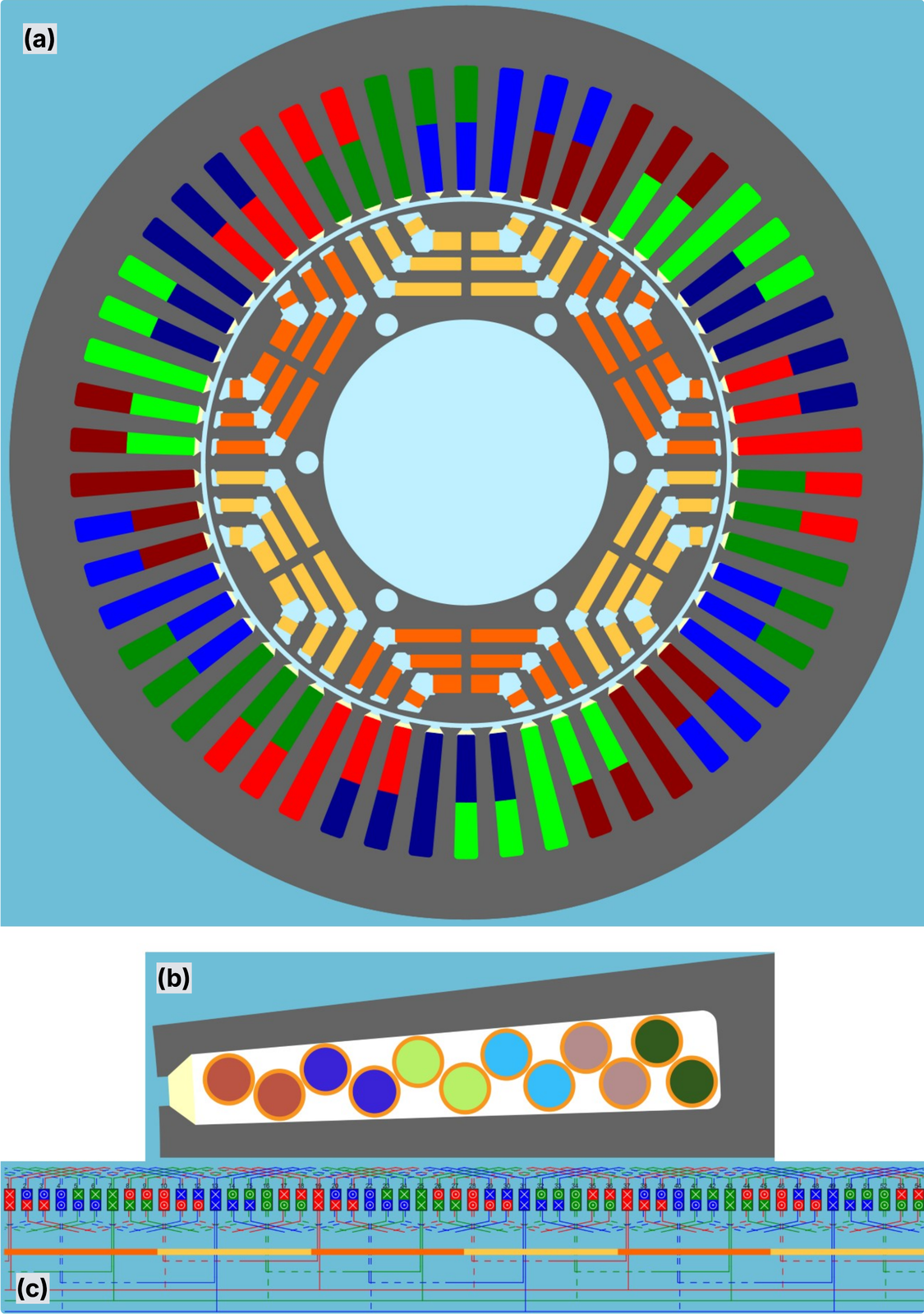
I developed a weakly coupled electromagnetic–thermal workflow for a representative MGU-K. A GT-SUITE lap duty cycle feeds the electromagnetic loss calculation, transient thermal model and temperature-corrected electromagnetic re-solve. Python and PyFlux automate repeated operating-point calculations.
Methodology
Define the operating demand
Connect a Las Vegas qualifying-lap duty cycle to a representative permanent-magnet synchronous machine.
Resolve component losses
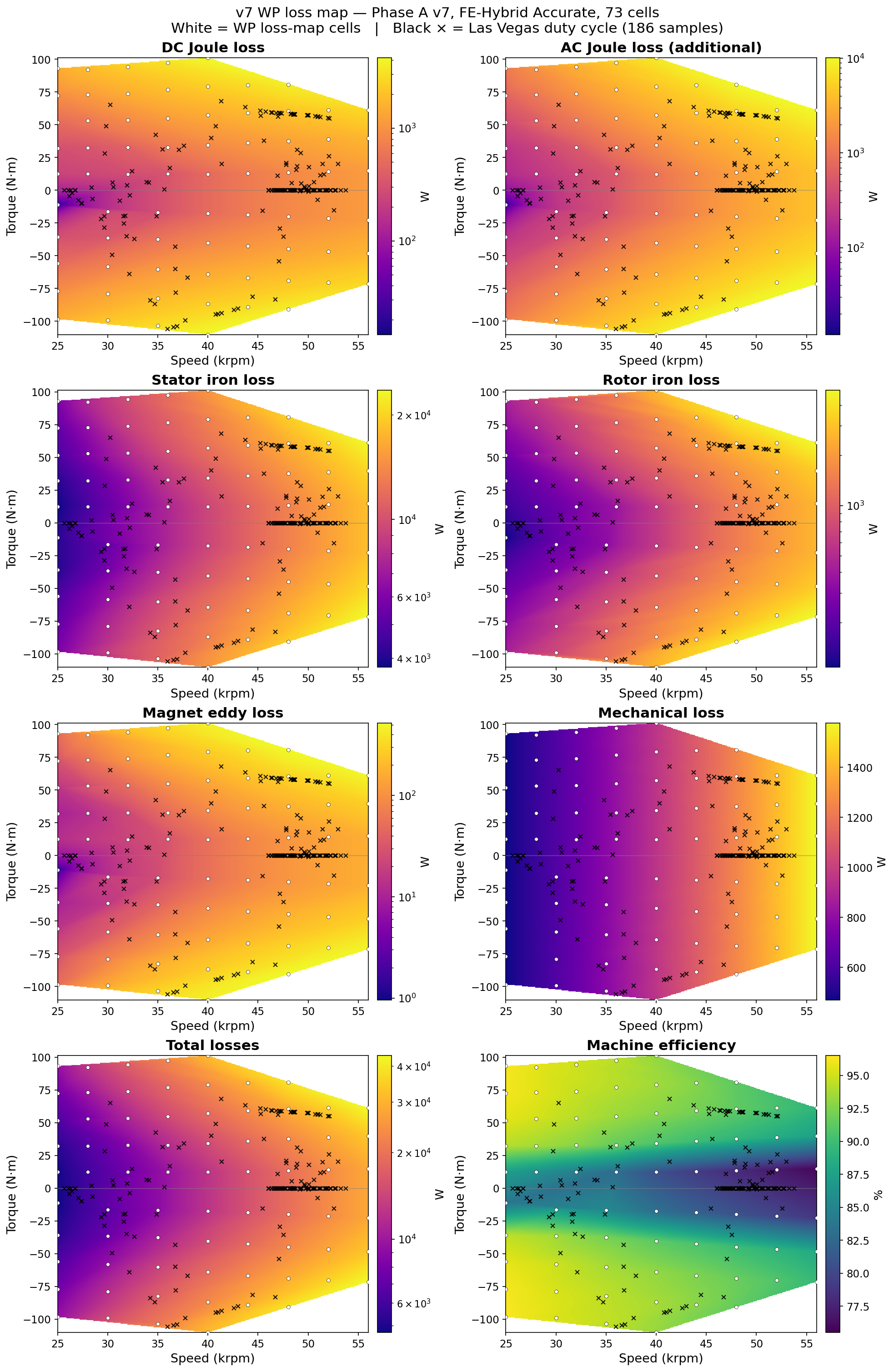
Build a 73-point signed loss map and examine 109 non-coast lap operating points with finite-element electromagnetic calculations.
Close the thermal loop
Run transient thermal cases from two pre-lap thermal states, then feed component temperatures back into the electromagnetic model.
Findings
The workflow traces the chain from lap demand to component losses, temperatures, voltage and torque response. The dissertation identifies the importance of rotor-side heat extraction and pre-lap thermal state. Temperature feedback changes voltage headroom as well as torque; it cannot be reduced to a uniform torque penalty.
Scope & limitations
This is a representative academic machine, not a race-team design. Cooling conditions are calibrated modelling inputs, so absolute temperatures are conditional on those assumptions. The submitted dissertation supports relative trends rather than hardware performance predictions. Structural coupling is outside the submitted dissertation case study.